


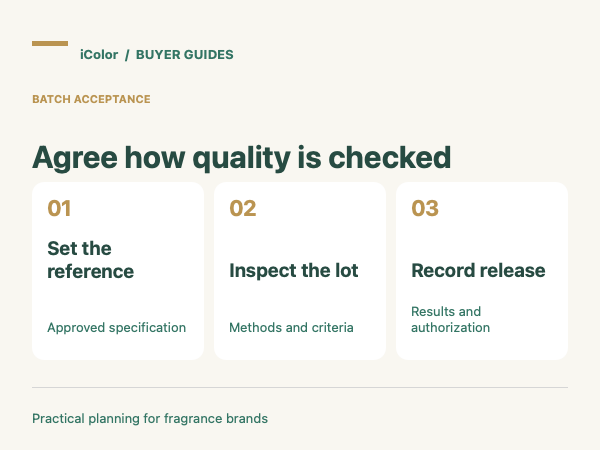
A perfume quality control checklist should connect each purchasing requirement to a method, acceptance criterion and record. “Check quality before shipment” leaves the inspector to decide what good means.
Start with the approved product and packaging references. Then agree which checks take place during production, which apply to finished goods and what happens when a result falls outside the agreed limits. This checklist is a template to adapt with the supplier, not evidence that a particular batch has passed.
What must be agreed before perfume production?
Agree the specification, approved references, inspection plan and release responsibility before production begins. The buyer and supplier need the same version of each document.
Identify the fragrance and concentration, fill specification, bottle, pump, collar, cap, decoration and carton. Link each item to a reference or drawing. Record which sample represents the liquid and which represents the complete finished pack; a scent vial cannot stand in for a packaging approval.
Use the sampling process guide to organize approvals. If a component changes later, ask which earlier checks remain applicable and which need repeating.
Specify who may authorize a deviation. Production staff should not have to infer whether a cosmetic difference is acceptable from an informal message with no sample reference.
What should a perfume inspection checklist contain?
Each row should state the item, comparison or test method, agreed acceptance criterion and evidence to retain. Set product-specific numerical limits with qualified personnel rather than copying universal tolerances.
| Check | Method or reference to agree | Record |
|---|---|---|
| Liquid identity and appearance | Compare with the approved reference under defined conditions | Formula/version, sample IDs, observations and results |
| Fill quantity | Agreed measurement method and applicable quantity requirements | Measured results, equipment and sample selection |
| Pump and spray | Agreed actuation sequence and performance criteria | Pump reference, observations and failures |
| Closure and leakage | Defined orientation, duration and environmental conditions | Assembly details, test conditions and results |
| Bottle and decoration | Approved drawing/artwork; defect definitions | Photos, affected locations and counts |
| Labels and coding | Approved artwork and traceability requirements | Artwork version, code legibility and recorded batch |
| Carton and packing | Approved pack specification and transit plan | Unit count, protection, markings and carton checks |
An inspector can observe scent consistency against a reference. That observation does not by itself establish chemical composition, safety or every performance claim. Define any laboratory work separately, including who performs it and how results will be interpreted.
Keep the cost worksheet consistent with the inspection plan. Third-party inspection, additional testing or reinspection may be separate quotation lines.
How do you separate compatibility testing from batch inspection?
Compatibility work evaluates the proposed liquid and packaging combination under agreed conditions; batch inspection checks a particular production lot against the approved requirements. They answer different questions.
For development, ask how the formula, pump seals, decoration and other contact materials will be evaluated together. Record the actual components used, exposure conditions, observations and approval limits. Avoid transferring results from one formula or pump to another without review.
For the production lot, check that the approved components were used and assembled correctly. A shipment inspection does not recreate every development study. A short leakage check cannot establish shelf life.
iColor’s quality overview describes several testing activities. Request a project-specific plan and resulting records to establish which activities apply to your order. Do not assume every listed capability is included in the unit price.
How should you select samples and classify defects?
Agree lot definition, sample selection, defect categories and acceptance rules in writing. Inspection conclusions depend on that plan as well as the results.
Define what counts as a lot: the relevant scent, size, production run or other traceable group. State who selects units and from which cartons or production stages. A few units handed over by a supplier may be useful for discussion, but their selection should be documented.
Write defect definitions around the product. Leakage, unreadable batch coding, an incorrect label and a minor decoration mark have different consequences. Agree photographs or examples where visual judgment matters.
If the parties adopt a statistical sampling standard, identify its edition and all plan parameters with the inspector. A sampling plan is not a promise that every unit is defect free. Avoid importing an AQL value from another product without agreeing the risks and defect definitions.
Use a log containing lot reference, selected units, method, observed defect, count, severity and disposition. Keep original observations even if the supplier later sorts or reworks the goods.
Which documents support batch release?
Keep the inspection results, applicable test reports, batch traceability and approval record together. A release decision should identify what was reviewed and who accepted any remaining exceptions.
ISO describes ISO 22716 as guidance covering cosmetic production, control, storage and shipment. Its scope does not extend to research and development or distribution of finished products. ISO 22716 cosmetics GMP overview provides that scope; it does not establish the requirements for your individual purchase.
Verify certification claims against their actual scope. ISO guidance on certification and verification explains that certification comes from external certification bodies. A management-system certificate does not replace results for the shipment being purchased.
For each report, check product identification, date, method, laboratory or responsible party, results and the specification used. If a document concerns a fragrance ingredient rather than the finished perfume, record that distinction.
| Release field | Entry to complete |
|---|---|
| Lot and specification | Lot reference, quantity, specification version |
| Evidence | Inspection and test-report references |
| Open issues | Deviations, affected quantity and agreed disposition |
| Decision | Release, hold, sort, rework or reject under agreed terms |
| Authorization | Name/role, date and written approval reference |
A purchasing checklist supports coordination. It does not replace the safety or regulatory assessment needed for the intended market. Assign those responsibilities before the order through the perfume RFQ.
What happens when a batch fails an agreed check?
Hold the affected goods and apply the agreed disposition process before shipment. Record the issue, containment, corrective action and evidence required for a new release decision.
Ask whether the issue affects one carton, one component batch or the whole lot. Agree sorting or rework instructions and how the corrected goods will be identified. Retain the original failure record alongside the follow-up inspection.
Update the production and delivery schedule if the release date changes. A shipping booking should not automatically override an unresolved quality hold.
Discuss your perfume inspection requirements with iColor before placing the order. Send the checklist with the product brief so methods, responsibilities and any extra charges can be confirmed.
Frequently asked questions
Is a sample approval enough to release the production batch?
Sample approval establishes a reference for the agreed product. It does not show that the production lot matches it. Keep batch inspection, applicable test results and release authorization separate. Record the reference used during inspection so the supplier and buyer can trace the decision.
Should every perfume order use the same leakage test?
Agree conditions that fit the liquid, closure, pack and expected handling. Record orientation, duration, temperature conditions and acceptance criteria. A test description without those details is difficult to repeat. Review the plan when the formula, pump or bottle changes.
Does a GMP certificate prove my shipment passed inspection?
A certificate describes a specified scope and organization or site. It is different from the inspection and test records for your batch. Verify the certificate separately, then request the product-specific evidence and release decision that your purchasing agreement requires.
Can a supplier replace the pump after sample approval?
Treat the replacement as a specification change. Ask for the component reference, reason, effect on performance and any repeat checks needed. Obtain written approval before use. A pump that looks similar may still require review with the proposed liquid and bottle.
Who should approve a quality deviation?
Name the authorized role in the order documents. The approval should identify the lot, issue, affected quantity and limits of acceptance. Keep it with the inspection record. If the deviation requires specialist safety or regulatory review, obtain that review before making the release decision.
Sources and scope
iColor Cosmetics | Buyer education | Updated November 19, 2026. The worksheets are editorial purchasing tools. Product-specific methods, commercial terms and release decisions require agreement with the responsible parties. No customer case, individual expert review or completed laboratory test is claimed.